
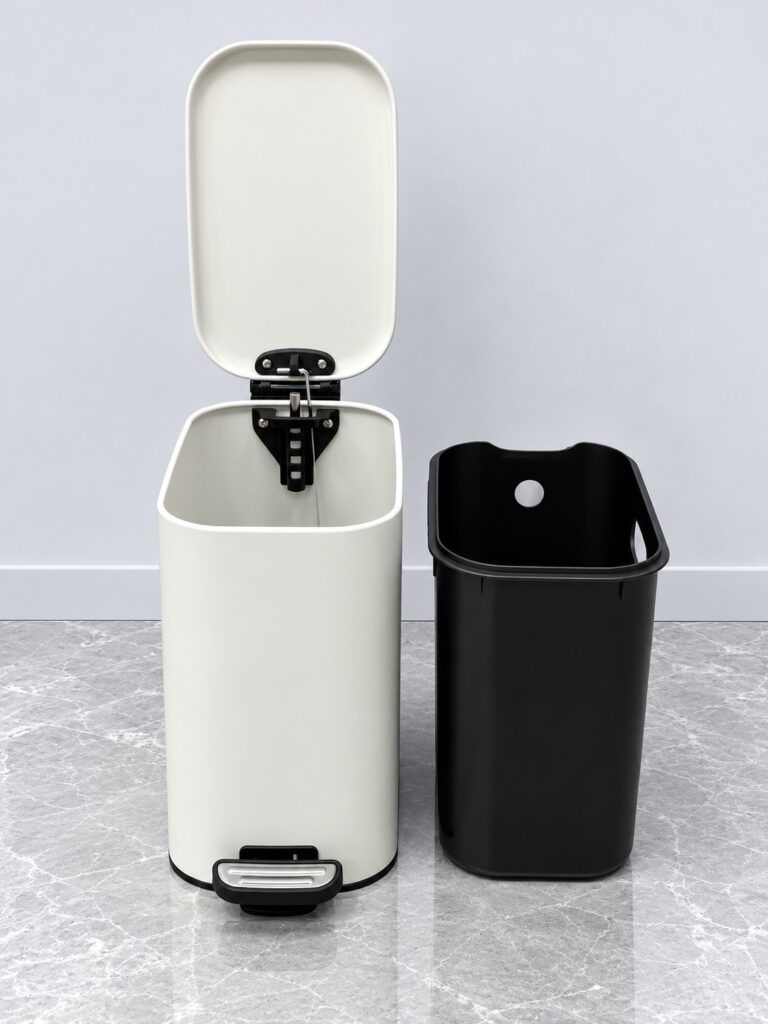
A trash bin is a practical household item, but it is also part of the interior environment. In kitchens, bathrooms, bedrooms and home offices, buyers may look for products that fit both the available space and the overall appearance of the room.
This creates an opportunity for retailers and product developers to think beyond individual models. Instead of offering unrelated bins, they can consider a coordinated collection with consistent styling and several capacity options.
This is not a claim that every consumer wants to buy bins in sets. Rather, it is a product-development approach worth testing in markets where design consistency, room-by-room organisation and convenient product selection matter.
1. Why Product Coordination Deserves Attention
Home accessories are often selected in relation to other items in a room. Colour, shape, finish and size can all affect how well a product fits into its surroundings.
Trash bins are no exception. A customer furnishing a home may prefer a compact bin for the bathroom and a larger version for the kitchen, while keeping a similar visual style.
For retailers, a coordinated range can offer several benefits:
- A more consistent visual presentation.
- A clearer relationship between product sizes.
- More options for customers with different space requirements.
- Opportunities to recommend complementary products.
- A recognisable collection for a private-label brand.
These are potential benefits rather than guaranteed sales outcomes. Retailers should validate them through customer feedback, sales data and product testing.
2. Different Rooms Need Different Capacities
A coordinated collection does not mean every room needs the same bin.
| Location | Product considerations |
|---|---|
| Bathroom | Compact footprint, convenient access and straightforward cleaning |
| Bedroom | Capacity suited to everyday dry waste and available floor space |
| Kitchen | Capacity, lid operation and the frequency of emptying |
| Home office | Placement near the work area and the types of waste generated |
| Shared or commercial space | Usage volume, cleaning routines and durability requirements |
A useful collection combines visual consistency with practical differences between models.
Buyers should not select sizes solely because they look good together in a photograph. Each product should meet the needs of its intended location.
3. Why Shape and Finish Matter
Capacity is important, but it is not the only factor influencing product selection.
Shape and placement
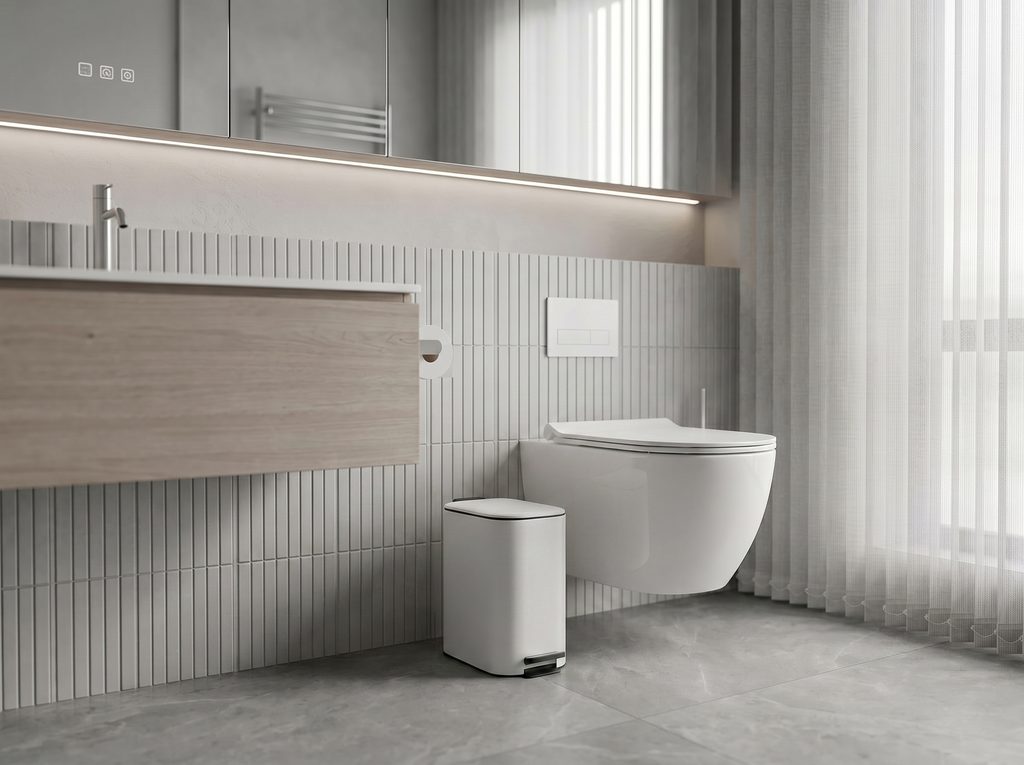
Square or rectangular designs may sit neatly against walls or align with certain furniture layouts. Rounded designs may suit other spaces or aesthetic preferences.
Neither shape is universally better. The useful question is whether the product fits the available footprint and leaves enough room for opening, cleaning and everyday movement.
Surface finish
Brushed stainless steel, coloured coatings and other finishes can create different visual effects.
A coordinated range may use a consistent finish across several sizes, helping the products look related. However, buyers should confirm finish availability and colour consistency across the actual models they plan to order.
Functional details
Lid design, pedal operation, inner-bucket arrangements and base construction can also affect suitability.
A collection should maintain the functional requirements of each model rather than prioritising appearance alone.
4. What a Coordinated Collection Means for Retailers
A collection approach can influence how products are presented across physical stores and online channels.
In a physical store, displaying multiple sizes together may help customers understand the range. Online, retailers can use consistent photography and clear size comparisons to explain the differences between models.
Useful merchandising elements include:
- A consistent product naming system.
- Clear capacity and dimension information.
- Images showing relative size.
- Room-based application photographs.
- A straightforward explanation of each model’s main differences.
- Optional bundle offers where demand supports them.
For online sellers, clear product information is particularly important. Customers need to understand whether they are buying one bin or a multi-piece set, which capacities are included and how large the products are.
5. Should Brands Offer Bundles or Individual Products?
The answer depends on the target customer and sales channel.
Individual products may suit customers replacing one bin or looking for a specific capacity. Bundles may be relevant for customers furnishing several rooms, purchasing gifts or seeking a coordinated appearance across a home.
A retailer can test both approaches without committing to a large number of fixed combinations at the beginning.
For example, a product family could launch with individual listings, followed by selected bundles after demand patterns become clearer.
Before introducing bundles, buyers should check the combined price, shipping dimensions, packaging protection and fulfilment arrangements. A bundle that looks attractive on a product page still needs to work operationally.
6. What Importers Should Consider Before Expanding a Range
Adding sizes can make a collection more useful, but it also increases the number of products that need to be forecast, purchased, stored and replenished.
A practical evaluation should include:
- Market fit: Which customer groups are most likely to need each size?
- Price positioning: Does each model have a clear role within the range?
- Specification consistency: Which features and finishes are shared, and which vary?
- Packaging: Are individual products or bundles more practical for the intended sales channel?
- Inventory: Can each size be monitored and replenished appropriately?
- Product presentation: Can customers easily understand the differences between the models?
For a new range, it may be more practical to test a limited number of sizes and expand according to actual results rather than launch every available capacity immediately.
7. Applying the Idea to a Square Pedal Bin Range
A square pedal bin collection is one example of how this approach can work.
OWIN HOUSEWARE’s T1027 series includes capacities from 6L to 60L, giving buyers several options to consider when developing a product range.
A retailer might evaluate smaller sizes for bathrooms or bedrooms, medium sizes for general household use, and larger models for kitchens or selected commercial applications. The exact placement should be determined by the product’s confirmed specifications and the target customer’s needs.
The products can be assessed as a coordinated collection, individual SKUs or selected retail combinations. Whether they should be sold together depends on demand, pricing, packaging and logistics rather than appearance alone.
8. How to Test Whether a Set-Based Offer Works
Before committing to a large-scale bundle programme, buyers can test the concept in a controlled way.
- Compare customer responses to individual products and bundle listings.
- Monitor sales by capacity and combination.
- Review questions about dimensions, included items and intended use.
- Calculate fulfilment costs for both individual orders and combined orders.
- Collect feedback on the visual consistency of the collection.
- Adjust the assortment based on actual results.
The goal is to understand whether coordinated products make purchasing easier and create a commercially workable offer.
Frequently Asked Questions
Are matching trash bins becoming a universal consumer preference?
There is no basis for assuming that every market or customer prefers matching sets. A coordinated collection is a product strategy that retailers can test against local customer needs.
Is it better to sell trash bins individually or in sets?
Neither approach is universally better. Individual sales serve customers who need a specific model, while sets may suit customers who want several coordinated products. The choice should reflect demand and fulfilment costs.
What is the main advantage of a multi-size product family?
It gives customers options within a consistent design language. For retailers, it can also simplify product presentation and create opportunities to recommend complementary sizes.
What should suppliers provide for a coordinated collection?
Buyers should request confirmed specifications, available capacities, finish options, packaging details and quotations for the intended order structure.
Final Thoughts
A coordinated trash bin collection is one way to connect practical product requirements with a more consistent home-accessory offering. Its value depends on how well the sizes, finishes and functions match customer needs.
For importers and retailers, the most sensible approach is to treat set-based selling as a commercial option to test—not as a guaranteed route to higher sales.
Exploring a coordinated trash bin collection for your brand or retail channel?
OWIN HOUSEWARE can discuss available capacities, product specifications and packaging options for your target market.
Email: info@owinhw.com | sales02@owinhw.com
WhatsApp / WeChat: 0085261915769
Related reading:
- [How to Choose the Right Pedal Bin Capacity: A 6L–60L Buyer Guide for Hotels, Offices and Commercial Spaces]
- [410 vs 304 Stainless Steel Waste Bins: How Wholesale Buyers Pick the Correct Grade]
- [Why You Should Approve a Trash Bin Sample Before Bulk Production]