
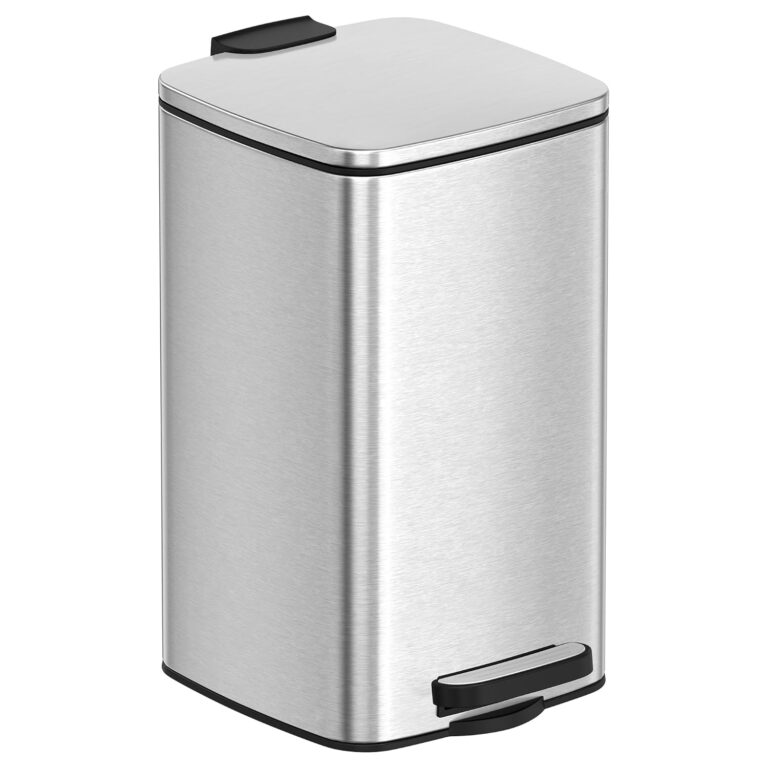
Stainless steel waste bins are used in kitchens, bathrooms, offices and hospitality environments. Their appearance can remain consistent with regular care, but fingerprints, water marks, dust and cleaning residue may become visible during everyday use.
The right cleaning method depends partly on the surface finish. A brushed stainless steel body, a coated surface and a fingerprint-resistant finish may not respond to every cleaning product in the same way.
For retailers, hospitality buyers and product managers, understanding basic care requirements can help set realistic expectations and provide clearer after-sales guidance.
1. Why Do Stainless Steel Bins Show Fingerprints and Marks?
Stainless steel is valued for its appearance and practical use, but its surface can still show signs of handling.
Common marks include:
- Fingerprints and skin oils.
- Water spots after cleaning.
- Dust and general surface residue.
- Cleaning streaks.
- Light scratches caused by abrasive materials or rough handling.
The visibility of these marks depends on the surface finish, lighting, colour and frequency of use.
For example, a highly reflective surface may make fingerprints more noticeable under direct lighting, while a brushed finish may make some marks less obvious when viewed in the direction of the grain.
This does not mean one finish is always easier to maintain. The result depends on the product and its environment.
2. Identify the Surface Finish Before Cleaning
Before applying a cleaning product, identify the type of surface.
Brushed stainless steel
A brushed finish has a visible grain or directional texture. When cleaning, wiping along that direction can help avoid creating marks that stand out against the existing pattern.
Coated or coloured surfaces
Some bins use a painted or powder-coated exterior. These surfaces should be cleaned according to the manufacturer’s care instructions because unsuitable chemicals or abrasive tools may affect the coating.
Fingerprint-resistant finishes
A fingerprint-resistant treatment may reduce the visibility of everyday handling marks, but it should not be assumed to make the surface completely mark-free or suitable for every cleaner.
Buyers should request the care instructions for the actual product rather than relying on the generic description “stainless steel.”
3. A Practical Routine for Everyday Cleaning
For routine surface cleaning, a cautious approach is generally more appropriate than using strong chemicals or abrasive tools.
A basic process is:
- Remove loose dust with a soft, clean cloth.
- Use a soft cloth lightly dampened with water or a cleaner approved for the product.
- Wipe the surface gently, following the grain where the brushed finish has a clear direction.
- Remove cleaning residue with a clean damp cloth if the product instructions call for it.
- Dry the surface with a soft cloth to reduce visible water marks.
- Check the lid, handle and other frequently touched areas for remaining residue.
Always follow the product manufacturer’s instructions. If a cleaner has not been confirmed as suitable, test it on a small, inconspicuous area first.
The routine should also reflect the location. A kitchen bin may need more frequent cleaning than a bin used for dry paper waste in an office.
4. What Should Be Avoided?
Some cleaning practices may leave marks or damage certain finishes.
| Practice | Why caution is needed |
|---|---|
| Steel wool or harsh abrasive pads | May scratch the surface or disturb the finish |
| Strong acids or bleach-based products | May damage some stainless steel or coated surfaces, depending on formulation and exposure |
| Unapproved solvents | May affect coatings or fingerprint-resistant treatments |
| Rough dry wiping | May spread dust and create visible fine scratches |
| Leaving liquid residue | May leave visible spots or streaks |
| Using the same dirty cloth repeatedly | May transfer grease and residue across the surface |
These are general precautions, not a substitute for product-specific cleaning instructions. Chemical compatibility depends on the product formulation, surface treatment, concentration and contact time.
If a bin has a special coating, do not assume that a cleaning method suitable for bare stainless steel is also suitable for the coated surface.
5. Fingerprint-Resistant Does Not Mean Maintenance-Free
Fingerprint-resistant treatments can help reduce the visibility of marks caused by everyday handling. They do not eliminate the need for cleaning.
Performance can vary with the treatment, surface colour, lighting and usage conditions.
For product buyers, the important questions are:
- Is the finish part of the standard product or an optional specification?
- What cleaning method does the supplier recommend?
- Is the finish appearance consistent with the approved sample?
- Are there any restrictions on cleaning agents?
- How should visible marks be evaluated during quality inspection?
For a private-label programme, buyers can document the approved surface appearance and cleaning instructions as part of the product specification.
6. How to Maintain a Consistent Appearance Across Multiple Locations
Hotels, offices and retail chains may use the same bin model across many rooms or sites. In these cases, maintenance practices can influence how consistent the products look over time.
A simple internal care guide can specify:
- Which cleaning products are approved.
- Which cloths or cleaning tools should be used.
- How often the surface should be wiped.
- How to dry the surface after cleaning.
- Which marks should be reported for further assessment.
This is especially useful when several cleaning teams work across different locations.
It can also help distinguish normal handling marks from potential product defects. A mark that can be removed through normal cleaning is different from a scratch, coating defect or other damage that remains after cleaning.
7. Cleaning the Lid, Pedal and Other Components
The outer body is only one part of a waste bin. Lids, pedals, hinges, sensor areas and inner buckets may require different care.
For pedal-operated models, keep the pedal area free of accumulated dirt and follow the manufacturer’s instructions for the mechanism.
For sensor-operated bins, avoid allowing liquid to enter the sensor or electronic housing. Follow the model-specific instructions for cleaning the sensor area and replacing batteries where applicable.
Removable inner buckets should be emptied and cleaned according to the product instructions. Ensure that components are properly dried before being returned to the bin when required by the care guidance.
Do not immerse electronic components or use excessive water around moving or powered parts unless the manufacturer explicitly allows it.
8. What Should Buyers Ask Suppliers Before Placing an Order?
For importers, distributors and brands, care requirements can be discussed before production rather than left until customer complaints arise.
Useful questions include:
- What is the surface finish of the selected model?
- Is the body bare stainless steel, coated or treated with a fingerprint-resistant finish?
- Which cleaning methods are recommended?
- Are any common household cleaning products unsuitable?
- Can the supplier provide a written care guide?
- How is the finish checked against the approved sample?
- Are surface-protection measures included in the packaging specification?
For repeat orders, the approved sample should remain the reference for finish appearance. Photographs can help communication, but lighting and camera settings may make surfaces look different.
Frequently Asked Questions
Can I use vinegar to clean a stainless steel trash bin?
Do not assume vinegar is suitable for every bin. Cleaning suitability depends on the stainless steel surface, any coating or treatment, and the concentration and contact time. Follow the product instructions or test an approved method on an inconspicuous area.
Can I use bleach on stainless steel?
Bleach-based products can damage some stainless steel surfaces or coatings, depending on the formulation and exposure. Avoid using them unless the manufacturer explicitly confirms they are suitable.
Does a fingerprint-resistant coating prevent all fingerprints?
No. Such treatments may reduce the visibility of fingerprints, but results vary by finish and conditions. Regular cleaning may still be necessary.
Why are streaks visible after cleaning?
Streaks can result from cleaning residue, water marks, an unsuitable cloth or wiping across the grain of a brushed surface. Follow the product’s cleaning guidance and dry the surface when recommended.
Final Thoughts
Maintaining a stainless steel trash bin is not simply a matter of using a stronger cleaner. Identifying the surface finish, choosing a compatible cleaning method and following a consistent routine are more useful starting points.
For buyers sourcing bins for retail, hospitality or commercial projects, clear care instructions can also improve the customer experience after the product has been delivered.
OWIN HOUSEWARE supplies stainless steel waste bins with different designs and surface-finish options. Buyers can discuss the intended application and request product-specific care guidance when reviewing a model.
Looking for stainless steel bins for retail, hospitality or commercial use?
Contact OWIN HOUSEWARE to discuss product specifications, surface finishes and packaging requirements.
- Email: info@owinhw.com | sales02@owinhw.com
- WhatsApp / WeChat: 0085261915769
Related reading:
- [410 vs 304 Stainless Steel Waste Bins: How Wholesale Buyers Pick the Correct Grade]
- [How to Compare Trash Bin Supplier Quotations: A Buyer’s Guide to More Than Unit Price]
- [Why You Should Approve a Trash Bin Sample Before Bulk Production]