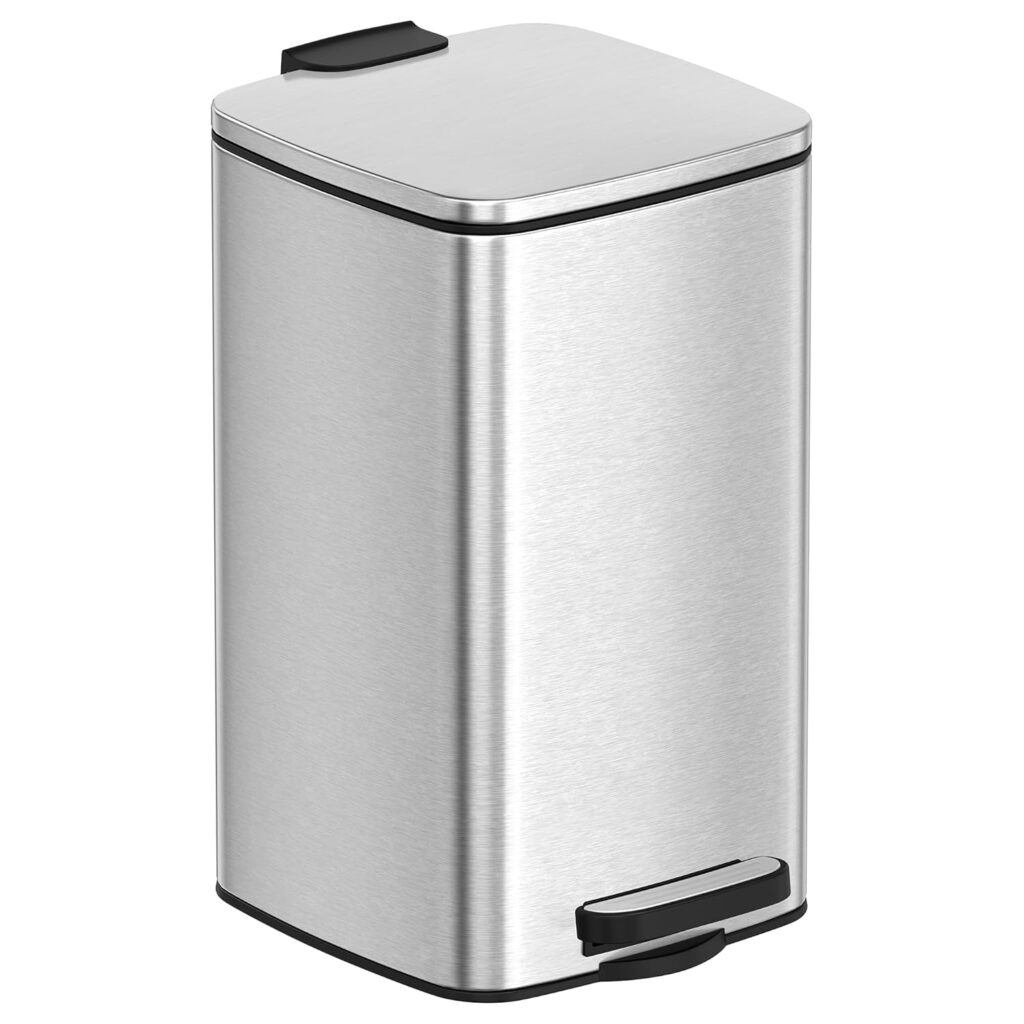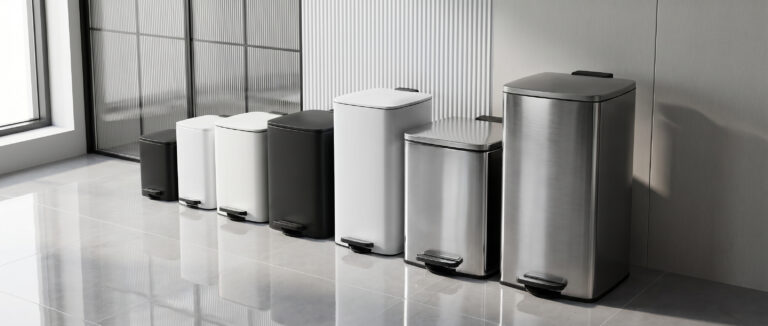
Choosing a pedal bin by capacity sounds simple.
A buyer sees options such as 6L, 12L, 20L, 30L, or 60L and may simply select the size that appears closest to the expected waste volume.
For professional procurement, however, capacity should be considered together with the location, waste type, emptying frequency, available floor space, and purchasing model.
A bathroom bin and a commercial kitchen bin may both need to be made from stainless steel, but their capacity requirements can be very different.
For importers, hospitality procurement teams, office suppliers, retailers, and private-label brands, a useful capacity guide should therefore answer two questions:
How much capacity does the application actually need?
and
How should a product range be structured across different capacities?
This guide provides a practical framework for evaluating pedal bin sizes from 6L to 60L.
Why Capacity Should Be Chosen by Application
There is no single capacity that works for every room.
A small bathroom may generate relatively little waste but have very limited floor space.
A hotel service area may have a higher waste volume and a completely different emptying schedule.
An office pantry may sit somewhere in between.
That means capacity should be evaluated using several factors:
- Waste volume
- Waste type
- Collection frequency
- Available floor space
- User traffic
- Liner or bag requirements
- Target retail or project positioning
A useful purchasing principle is:
Choose capacity based on the operational requirement first, then check whether the physical footprint works.
6L–60L Pedal Bin Capacity Guide
The following table can be used as an initial procurement framework.
| Capacity | Typical Application Examples | Main Consideration |
|---|---|---|
| 6L | Bathroom, bedroom, desk area | Compact footprint and low waste volume |
| 8L | Bathroom, bedroom, small office area | Small daily waste volume |
| 12L | Bathroom, hotel room, office | Balance between compact size and capacity |
| 16L | Hotel room, bathroom, office, utility area | Moderate daily waste volume |
| 20L | Office, bedroom, small commercial area | General-purpose capacity |
| 30L | Office, kitchen, commercial area | Higher waste volume |
| 40L | Kitchen, hotel, commercial area | Larger daily waste volume |
| 50L | Kitchen, hospitality, commercial area | Higher-capacity applications |
| 60L | High-volume kitchen and commercial areas | Large waste volume and fewer emptying cycles |
These are planning references rather than fixed rules.
Actual capacity requirements depend on the site.
For example, a 20L bin in a busy office pantry may need to be emptied more frequently than a 20L bin in a private office.
6L–16L: Compact Pedal Bins for Smaller Waste Zones
The smaller end of a product range is generally more relevant where floor space is limited and waste volume is relatively low.
Typical locations include:
- Hotel bathrooms
- Residential bathrooms
- Bedrooms
- Individual office areas
- Dressing areas
- Small utility spaces
What should buyers prioritize?
For these applications, capacity is only one part of the decision.
The procurement team should also consider:
- Footprint
- Ease of cleaning
- Inner bucket design
- Lid operation
- Surface appearance
- Consistency with other room furnishings
For hospitality projects, a smaller bin may also be part of a broader room-standardization program.
If the hotel uses the same visual design across 6L, 12L and larger bins, purchasing and replacement can become easier to manage.
20L–30L: General-Purpose Commercial and Household Sizes
The middle range can cover a wider variety of applications.
Potential uses include:
- Offices
- Hotel rooms
- Small kitchens
- Living areas
- Pantry areas
- Small commercial spaces
At this level, buyers should pay closer attention to the relationship between capacity and footprint.
A larger bin is not automatically better.
If a 30L model blocks a cabinet door or reduces usable walkway space, the additional capacity may not justify the larger footprint.
This is why a capacity chart should always be considered alongside actual product dimensions.
40L–60L: Larger-Capacity Pedal Bins
The 40L–60L range becomes more relevant where waste volume is higher or the buyer wants to reduce the frequency of emptying.
Typical applications may include:
- Main kitchen areas
- Hospitality service areas
- Larger commercial spaces
- High-traffic office areas
- Large residential kitchens
However, large capacity introduces additional procurement considerations.
1. Floor Space
A 60L bin needs more physical space than a 12L or 20L model.
The available footprint should therefore be checked before selecting the largest capacity.
2. Panel Size
As the bin becomes larger, the body panels also become larger.
For stainless steel products, material specification becomes more relevant because large flat panels can be more sensitive to impact and deformation during handling and transportation.
3. Packaging
Large bins also require careful packaging planning, especially for e-commerce and long-distance shipment.
A product that arrives with cosmetic damage can create a much larger commercial problem than the original packaging saving.
For buyers sourcing large-capacity stainless steel pedal bins, packaging should therefore be included in the purchase specification rather than treated as a separate afterthought.
Why Does Stainless Steel Thickness Change by Capacity?
One useful question for buyers is whether the same material thickness is used across an entire capacity range.
For a product series such as T1027, the stainless steel specification is graded according to capacity:
| T1027 Capacity | 410 Stainless Steel Thickness |
|---|---|
| 6L–30L | 0.30–0.35mm |
| 40L–60L | 0.40–0.45mm |
The logic is straightforward.
A larger bin has larger body and lid panels and may experience different handling and impact conditions from a compact bin.
Using a graded specification allows the material requirement to be considered according to the size of the product rather than applying one specification across every capacity.
For buyers, this is worth confirming when comparing quotations from different suppliers.
A useful PO question
Instead of writing only:
“410 stainless steel pedal bin”
consider specifying:
Capacity + stainless steel grade + thickness range
This makes supplier quotations easier to compare and reduces ambiguity during production.
Capacity Is Not the Only Specification That Matters
Two pedal bins with the same capacity can still provide different purchasing outcomes.
Before placing an order, buyers should also check:
Material
- Stainless steel grade
- Thickness
- PP components
- Surface treatment
Internal structure
- Removable inner bucket
- Liner compatibility
- Ease of cleaning
Lid
- Soft-close function
- Hinge construction
- Operating noise
Base
- Sealed or open construction
- Stability
- Suitability for the intended environment
Finish
- Brushed stainless steel
- Fingerprint-resistant coating
- Powder coating options
Commercial requirements
- OEM / ODM
- Logo customization
- Packaging requirements
- Capacity mix
- Retail or e-commerce packaging
Capacity is therefore best viewed as one part of a procurement specification, not the complete specification.
How Should a Buyer Build a Multi-Size Product Range?
For importers, distributors, retailers, and private-label brands, the decision may not be:
“Which one bin should I buy?”
It may instead be:
“Which capacities should I stock?”
This requires a different approach.
A coherent size ladder can cover different applications while keeping the visual identity of the range consistent.
For example:
| Product Tier | Example Capacities | Possible Role |
|---|---|---|
| Compact | 6L / 8L / 12L | Bathroom, bedroom, desk |
| Small-Medium | 16L / 20L | Hotel room, office, small commercial |
| Medium | 30L | General commercial and kitchen use |
| Large | 40L / 50L | Larger kitchens and commercial areas |
| Extra Large | 60L | High-volume areas |
Not every buyer needs all nine capacities.
The correct assortment depends on the target market.
An Amazon seller may begin with two or three high-demand capacities.
A hotel supplier may need several sizes to cover different room types.
A distributor may prefer a broader range to serve multiple customer segments.
How Many Capacities Should a Retail or Wholesale Buyer Stock?
There is no universal number.
Instead, start with the applications you actually serve.
If you sell primarily to hotels
Consider organizing the range by:
- Guest bathroom
- Guest room
- Office / back-of-house
- Kitchen / service area
If you supply offices
Focus on:
- Individual work areas
- Meeting rooms
- Pantry
- Shared commercial areas
If you are an Amazon or e-commerce seller
Consider:
- Search demand
- Product dimensions
- Shipping cost
- Carton volume
- Return risk
- Competition
- Price positioning
If you are an importer or distributor
A broader size range can provide more flexibility, but it also creates:
- More SKUs
- More inventory
- More packaging specifications
- More product photography
- More forecasting requirements
A complete 6L–60L series is therefore useful only when the market actually requires it.
A Simple Capacity Selection Checklist
Before confirming your order, answer these questions:
Application
- Where will the bin be used?
- Who will use it?
- What type of waste will it hold?
- How much waste is generated?
Operation
- How often will the bin be emptied?
- Is a removable inner bucket useful?
- Is soft-close operation relevant?
- Does the liner need to be replaced frequently?
Space
- What is the maximum available footprint?
- Does the lid have enough clearance?
- Can staff easily access the pedal?
- Will the bin interfere with doors or cabinets?
Procurement
- Does the supplier offer the required capacity?
- Is material thickness clearly specified?
- Is the same design available in multiple sizes?
- Can the supplier provide OEM or private-label customization?
- Does the packaging match the distribution channel?
Example: How a Hotel Buyer Might Build a Capacity Range
Imagine a hotel procurement team is sourcing a unified pedal bin series.
Instead of ordering one capacity for every location, the team could evaluate the property zone by zone.
| Area | Capacity to Consider | Procurement Logic |
|---|---|---|
| Guest bathroom | 6L–12L | Compact footprint |
| Guest room | 8L–16L | Moderate daily waste |
| Office | 12L–20L | Depends on staff density |
| Pantry | 20L–30L | Higher waste volume |
| Main kitchen/service area | 40L–60L | Higher volume and collection frequency |
Again, these are starting points rather than fixed specifications.
The actual choice should be validated against the property’s waste volume, cleaning schedule, floor layout, and local operating practices.
Where Does the T1027 Series Fit?
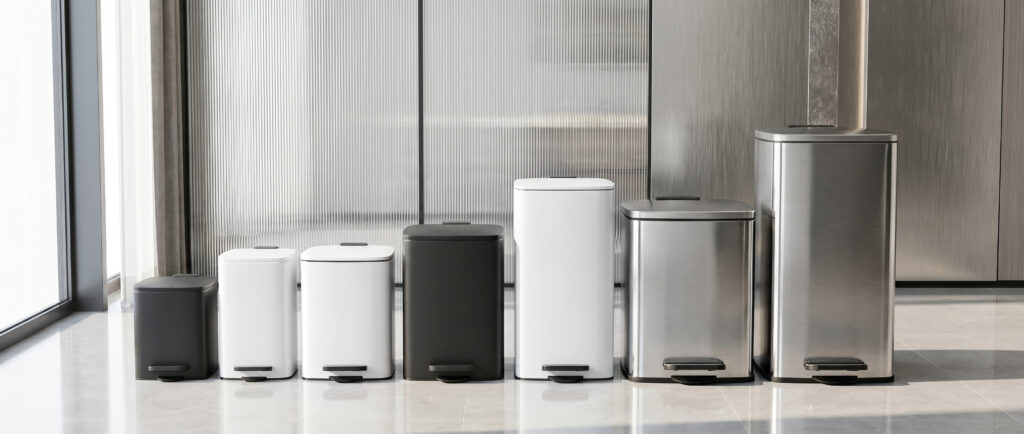
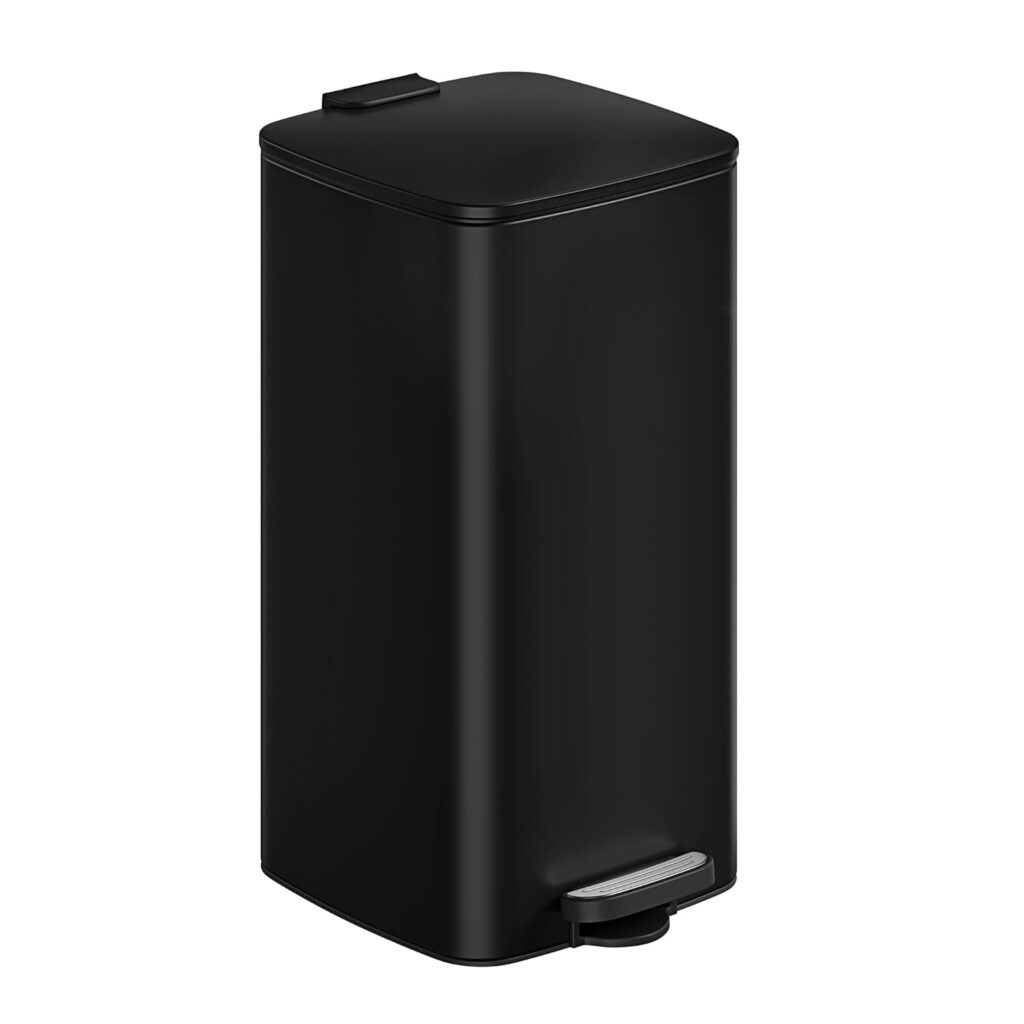
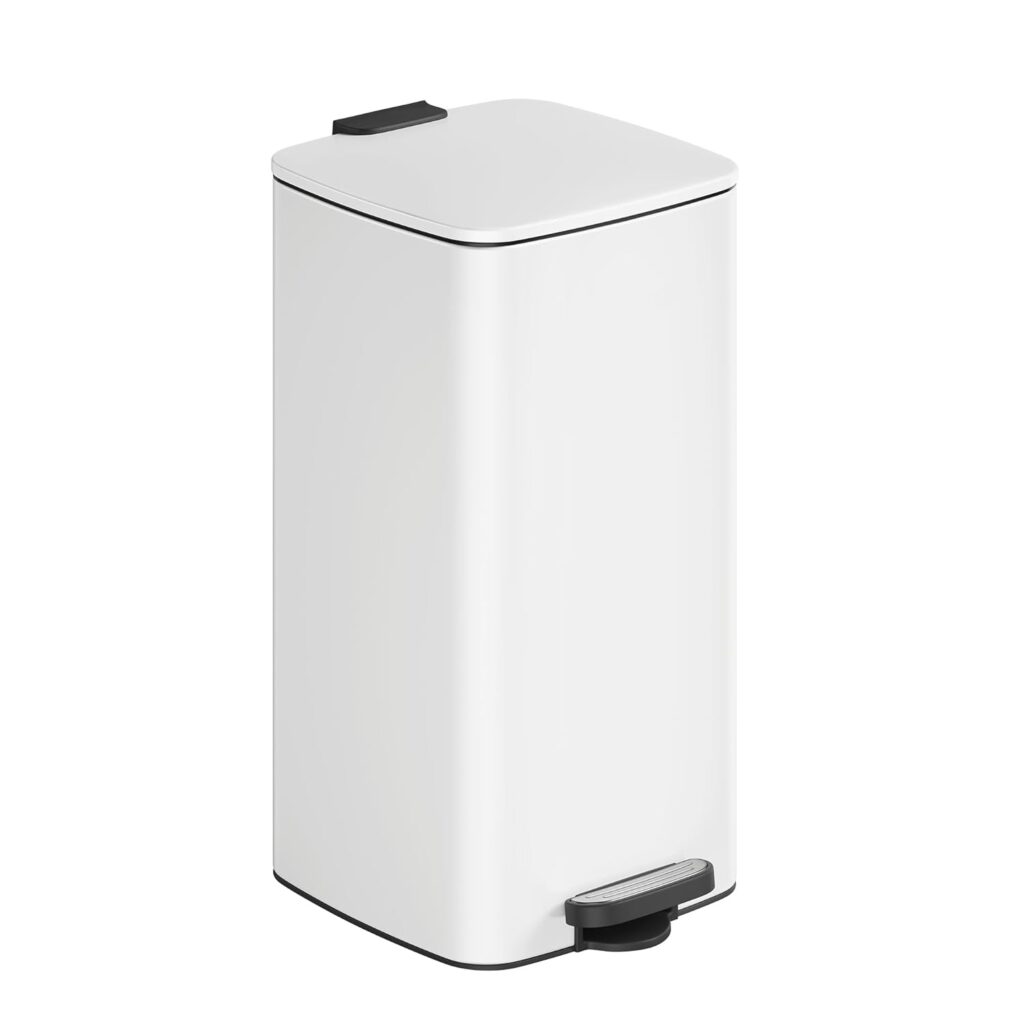
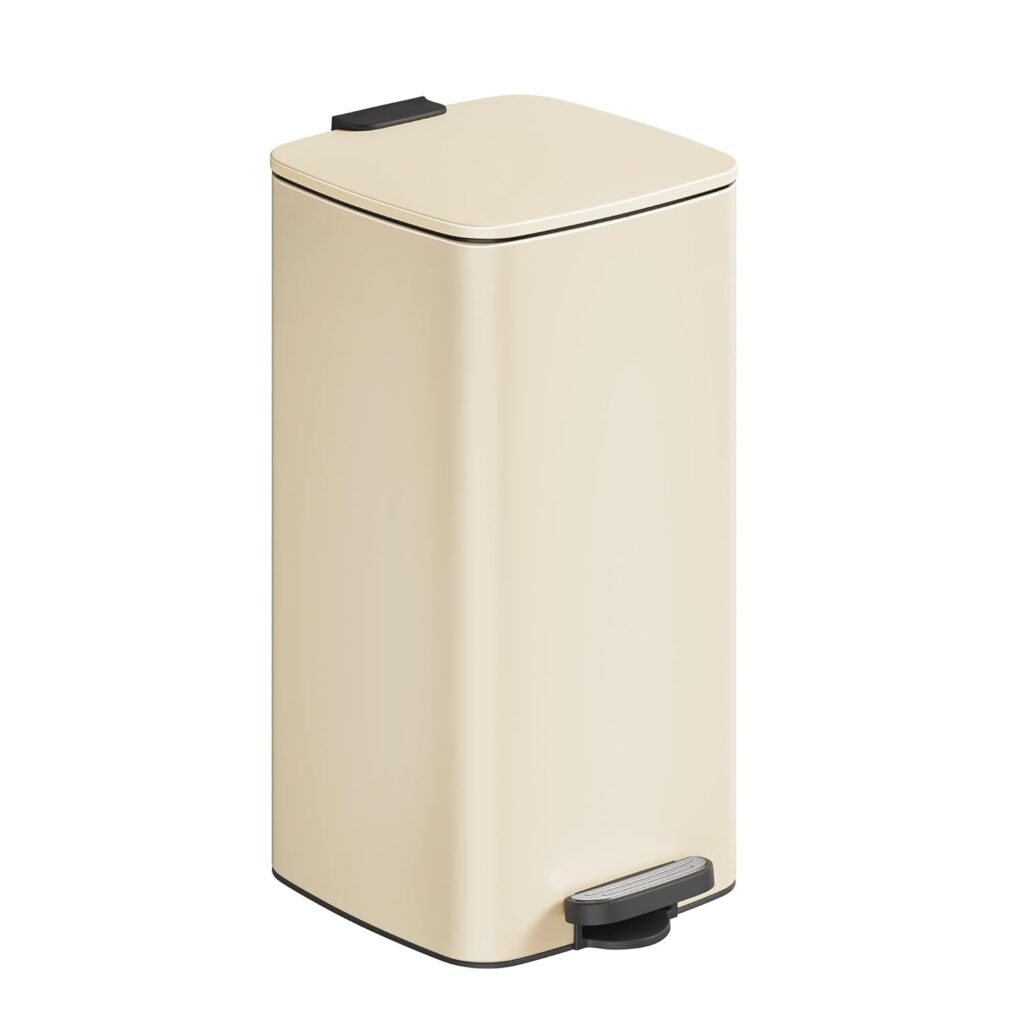
The T1027 square pedal bin series is designed around a broad capacity ladder:
6L / 8L / 12L / 16L / 20L / 30L / 40L / 50L / 60L
The common product platform uses:
- 410 stainless steel + PP
- Removable PP inner bucket
- Soft-close lid
- Fully sealed base
- Fingerprint-resistant coating
- Optional powder coating colors
- OEM / ODM support
- Laser logo customization
The main purchasing advantage of a multi-capacity series is not simply having “more sizes.”
It is the ability to select different capacities for different applications while maintaining a consistent product family.
For buyers managing several sales channels or hospitality projects, this can simplify:
- Product selection
- Product photography
- Private-label branding
- Assortment planning
- Supplier communication
- Replacement sourcing
The material specification also follows the capacity:
6L–30L: 0.30–0.35mm 410 stainless steel
40L–60L: 0.40–0.45mm 410 stainless steel
For large-capacity models, buyers should also evaluate packaging and transportation protection as part of the overall procurement specification.
Capacity vs. Total Cost: What Buyers Often Miss
The lowest purchase price does not necessarily mean the lowest total cost.
A buyer should consider:
Unit cost + freight + storage + handling + replacement + returns + operational cost
For example, selecting a very small bin may reduce the initial product cost but increase the frequency of emptying.
On the other hand, selecting a much larger bin can increase:
- Product cost
- Shipping volume
- Storage requirements
- Floor-space requirements
The objective is therefore not to maximize capacity.
It is to find an appropriate balance between capacity, footprint, operating frequency, and total cost.
Final Takeaway: Choose the Capacity Around the Workflow
When choosing a pedal bin, start with the room rather than the catalogue.
Ask:
Where will it be placed?
Then:
How much waste will it receive?
Then:
How frequently will it be emptied?
Finally:
What capacity, footprint, material specification, and packaging combination makes sense for the application?
For professional buyers, this process is more useful than simply selecting the largest available model.
A well-planned capacity range can also help importers, distributors, hospitality suppliers, and private-label brands build a more coherent product assortment without carrying unnecessary SKUs.
Need Help Comparing Pedal Bin Capacities?
If you are sourcing a multi-size pedal bin range for hotels, offices, retail, commercial spaces, or private-label programs, OWIN can provide T1027 specifications from 6L to 60L, with capacity-based material specifications and OEM/ODM options.
For project-specific requirements, contact:
Email: info@owinhw.com | sales02@owinhw.com
WhatsApp / WeChat: 0085261915769
Related reading:
- Square vs. Round Pedal Bins: Which Shape Makes Better Use of Space?
- 410 vs. 304 Stainless Steel Waste Bins: A Buyer’s Guide
- Sourcing Waste Bins for Cafés, Co-Working Offices & Small Restaurants: A Purchasing Checklist
- Preventing Dents and Scratches in Large Stainless Steel Pedal Bins During FBA Shipping