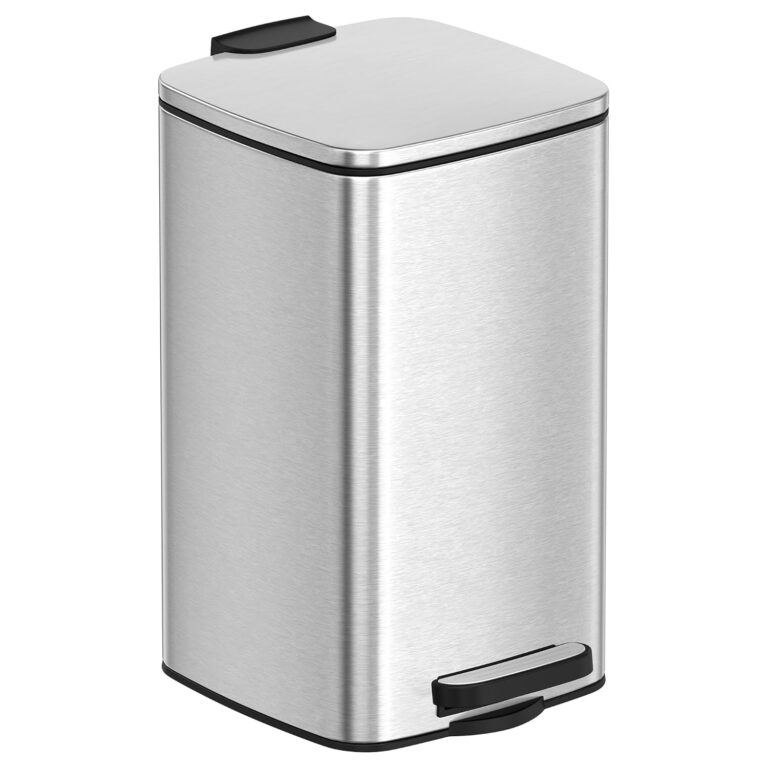
When sourcing a pedal bin for a hotel, office, apartment project, or commercial space, capacity and material are usually the first specifications buyers compare.
But there is another decision that can affect how well the bin works after installation:
Should you choose a square or round pedal bin?
The answer is not simply about appearance. The shape affects how the bin fits against walls, into corners, beside cabinets, under counters, and within rooms where floor space is limited.
For procurement teams, distributors, and private-label buyers, the more useful question is not “Which shape is better?” but:
Which shape fits the space and usage pattern better?
This guide compares square and round pedal bins from a practical purchasing perspective and explains when a square design may make more sense.
Square vs. Round Pedal Bins: What Is the Practical Difference?
The basic difference is straightforward: a square pedal bin has a more structured footprint, while a round bin has a continuous curved profile.
That difference becomes more noticeable when several pieces of furniture or equipment already occupy the room.
| Factor | Square Pedal Bin | Round Pedal Bin |
|---|---|---|
| Wall-side placement | Straight sides make alignment easier | Curved sides leave more irregular gaps |
| Corner placement | Generally easier to position | Corners can leave unused space |
| Narrow spaces | Can make better use of rectangular floor areas | Requires consideration of its circular footprint |
| Visual appearance | Structured, modern lines | Softer, more traditional appearance |
| Open areas | Works well when a defined footprint is preferred | Can work well where surrounding space is unrestricted |
| Multi-bin layouts | Straight edges can simplify alignment | Circular gaps may be more noticeable |
| Capacity options | Available across compact and larger formats | Also available in many sizes |
This does not mean that a square bin is always more space-efficient.
The surrounding layout matters more than the shape alone.
A round bin can work perfectly well in an open kitchen or spacious public area. A square bin may become more practical when the available floor area is rectangular, positioned against a wall, or interrupted by furniture.
Why Does Bin Shape Matter in Commercial Spaces?
In a residential setting, a few centimeters of unused floor space may not matter much.
In a hotel bathroom, office pantry, apartment corridor, or commercial washroom, the situation can be different.
The bin may need to share its footprint with:
- Cabinets
- Bathroom fixtures
- Desks
- Kitchen counters
- Cleaning equipment
- Doors
- Wall corners
- Other waste or recycling bins
This is why commercial procurement should evaluate the installation environment, not just the product dimensions.
A simple rule for buyers
If the available space is primarily rectangular, a rectangular or square product can often be easier to position.
If the product will sit in an open area with no surrounding furniture, a round format may be equally practical.
The decision should therefore start with the location.
Where Can a Square Pedal Bin Make Sense?
1. Hotel Bathrooms
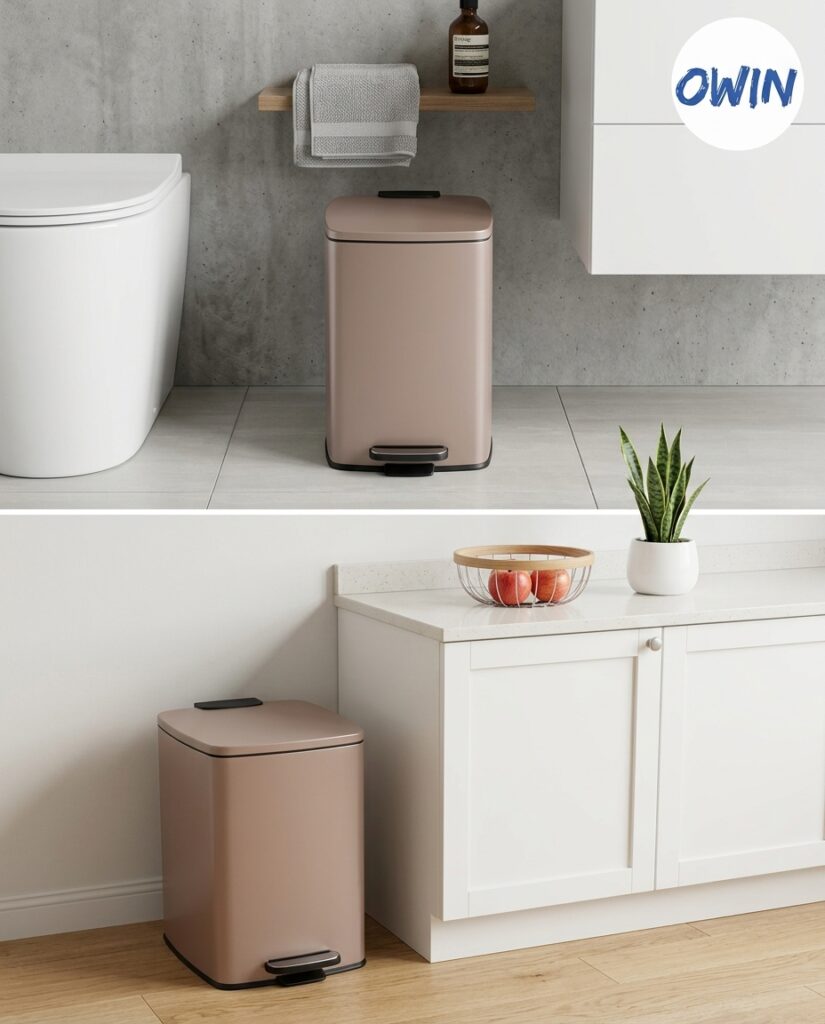
Hotel bathrooms often contain several fixed elements within a relatively compact footprint.
A pedal bin may need to sit beside a vanity, under or next to a counter, or against a wall.
A square profile can make it easier to visually align the bin with other straight-edged bathroom elements.
For hotel procurement, however, shape should be evaluated together with:
- Capacity
- Surface finish
- Lid operation
- Ease of cleaning
- Inner bucket design
- Noise during operation
The bin should fit the room without creating an additional obstacle for guests or housekeeping staff.
2. Hotel Guest Rooms
Guest rooms usually require compact waste bins for bathrooms, desks, dressing areas, or other small zones.
Here, the main consideration is often not maximum capacity.
It is:
How much useful capacity can be provided without taking up unnecessary floor space?
A square bin can be easier to position alongside furniture with straight edges.
For buyers developing a hotel room product range, it may also be useful to maintain a consistent visual language across several capacities.
3. Offices and Co-Working Spaces
Office waste bins are frequently positioned near desks, cabinets, printers, kitchenettes, or shared areas.
A square footprint can be useful when the available space is already organized around straight lines.
For example, a bin placed beside a cabinet may be easier to align when its side profile follows the cabinet rather than leaving a curved gap.
However, procurement teams should also consider how frequently the bin will be emptied.
A compact office bin with insufficient capacity may create more maintenance work even if its footprint is efficient.
4. Apartment and Residential Bathrooms
Bathrooms are another environment where floor space can be limited.
A small pedal bin may need to fit between a toilet, vanity, shower area, or wall.
For this application, the relevant question is often:
Can the bin fit into the available space while still providing enough capacity for the intended use?
This is where a square design can become a useful option, particularly when the surrounding fixtures create a rectangular layout.
5. Commercial Spaces With Multiple Bins
Shape becomes even more noticeable when multiple bins are installed together.
For example, a commercial site may use separate bins for:
- General waste
- Recyclables
- Food waste
- Other designated waste streams
Straight-sided products can simplify visual alignment when several units are positioned side by side.
That does not automatically make a square bin the right choice, but it gives procurement teams another factor to evaluate.
A Buyer Checklist: Is a Square Pedal Bin Suitable for Your Project?
Before selecting the shape, check the actual installation environment.
Space
- Will the bin sit against a wall?
- Does it need to fit into a corner?
- Is floor space limited?
- Are there cabinets or furniture immediately beside it?
- Will multiple bins be positioned together?
Usage
- How much waste is generated in this location?
- How frequently will housekeeping or cleaning staff empty the bin?
- Does the bin need hands-free operation?
- Is quiet lid closing important?
- Will the bin be used by hotel guests, employees, or customers?
Product
- Is the capacity appropriate?
- Is the inner bucket removable?
- Is the base suitable for the environment?
- Is the surface easy to maintain?
- Does the supplier offer the required finish or color?
- Can different capacities maintain a consistent appearance?
Square Pedal Bin vs. Round Pedal Bin: A Quick Decision Guide
If you need a simple starting point, use the following framework.
| Your Situation | Format to Consider | Why |
|---|---|---|
| Bin placed tightly against a wall | Square | Straight side can align with the wall |
| Bin positioned in a corner | Square | More predictable use of rectangular space |
| Limited rectangular floor area | Square | Structured footprint may fit the available area more efficiently |
| Large open floor area | Either | Surrounding layout has less influence |
| Soft, curved interior design | Round | Shape may better match the visual environment |
| Several bins placed in a row | Square | Straight edges can simplify alignment |
| Small bathroom | Square or Round | Compare actual dimensions before choosing |
| Large kitchen or utility area | Either | Capacity and workflow may matter more than shape |
The important point is that shape should not be evaluated in isolation.
A 30L square bin with an unsuitable footprint can be less practical than a well-positioned 30L round bin.
What Other Specifications Should Buyers Check?
Once the shape has been selected, procurement teams should move to the specifications that affect daily use and total purchasing cost.
1. Capacity
A bin that fits perfectly but needs to be emptied too frequently may not be operationally efficient.
Capacity should be matched to:
- Waste volume
- Emptying frequency
- Available floor space
- Type of waste
- Intended room or zone
2. Material
Stainless steel is commonly selected for pedal bins where appearance and daily-use durability are important.
For a square pedal bin series, buyers should also consider whether the supplier adjusts the material specification according to capacity.
For example, the T1027 series uses 410 stainless steel + PP, with graded stainless steel thickness:
- 6L–30L: 0.30–0.35mm
- 40L–60L: 0.40–0.45mm
The purpose of this type of graded specification is to avoid treating every capacity as if it has the same structural requirements.
3. Inner Bucket
A removable PP inner bucket can make liner replacement and cleaning more convenient.
For hospitality and commercial procurement, the inner bucket should be considered as part of the operating system rather than an optional accessory.
4. Lid Mechanism
A soft-close lid can be relevant in:
- Hotel rooms
- Bathrooms
- Offices
- Apartments
- Other areas where repeated lid noise may be undesirable
5. Base Construction
A fully sealed base is another specification worth checking, particularly when the product will be used in areas where the floor may occasionally become wet.
6. Surface Finish
Fingerprint-resistant coating can help reduce the visibility of everyday marks on stainless-steel surfaces.
For private-label programs, powder coating can also provide additional color options when the product needs to match a retailer’s or hospitality brand’s visual identity.
Where Does the T1027 Square Pedal Bin Series Fit?
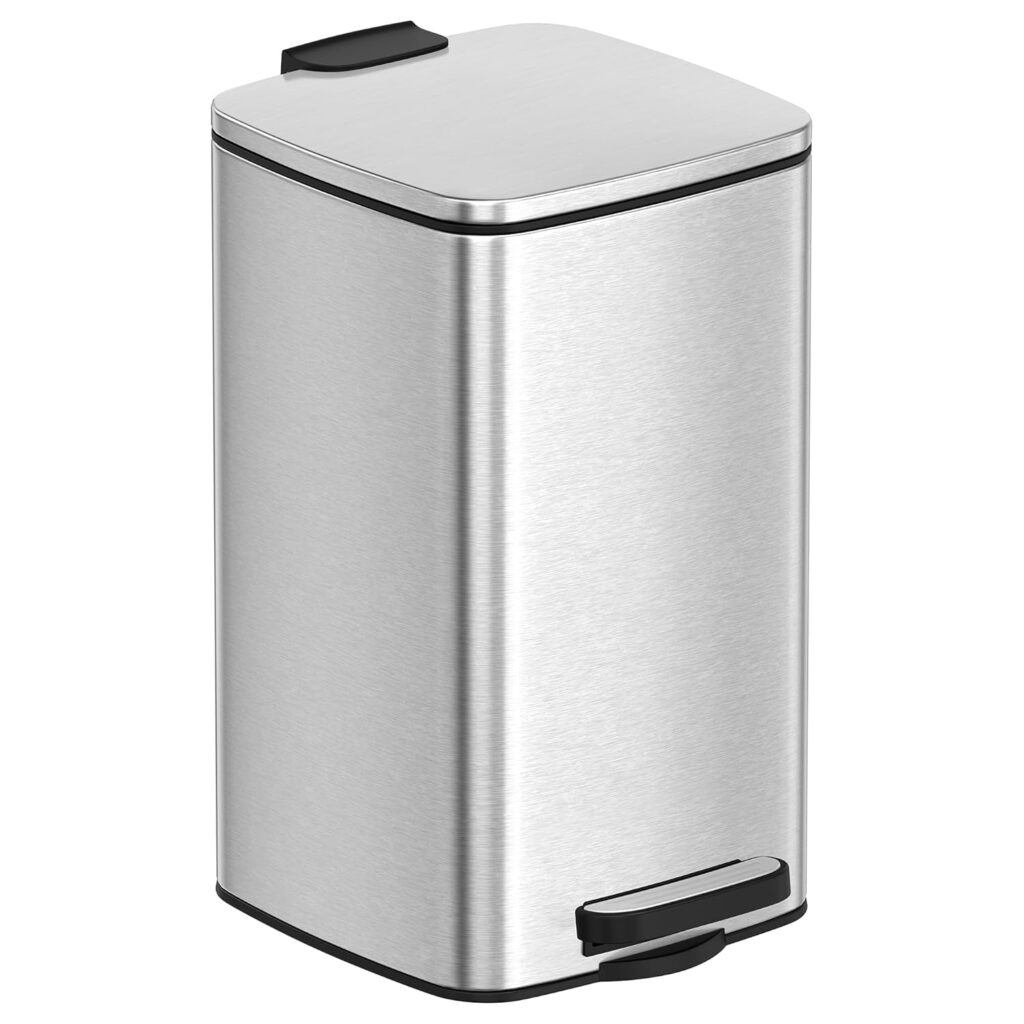
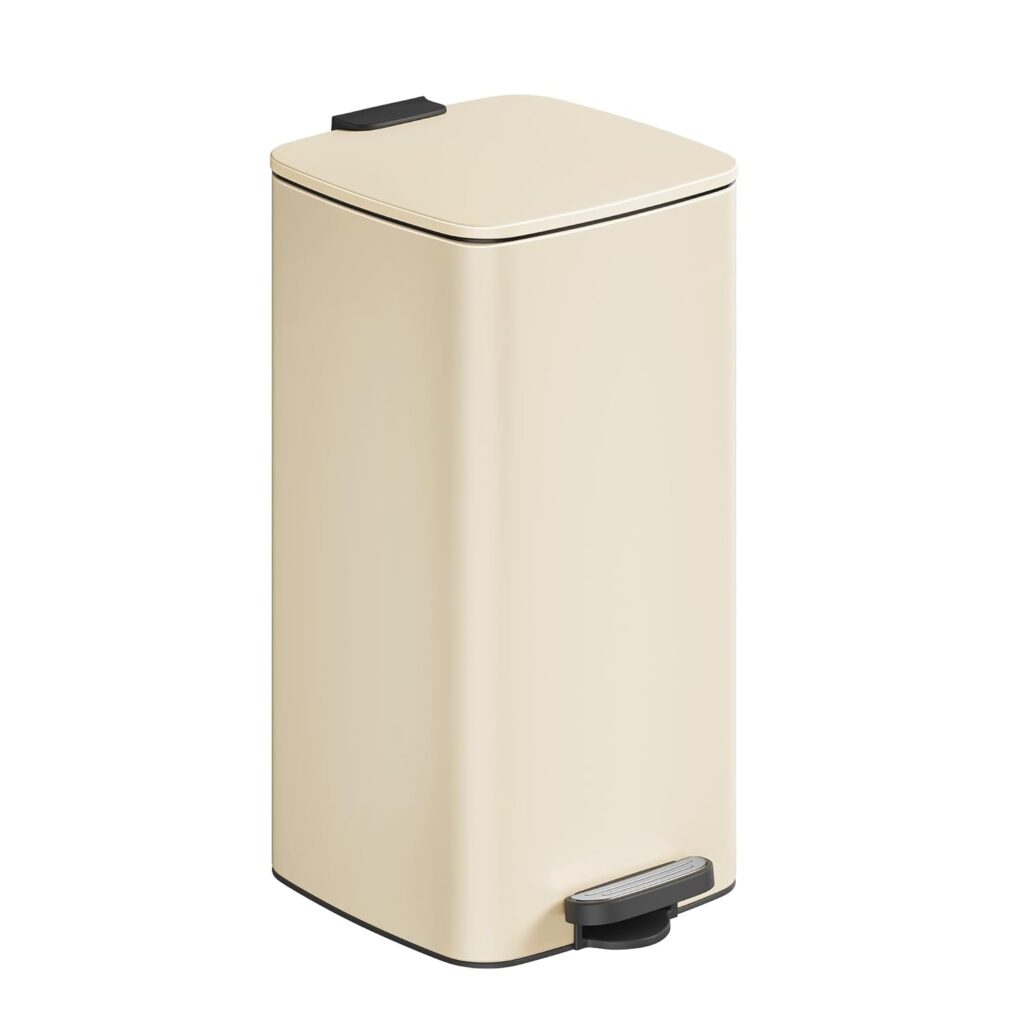
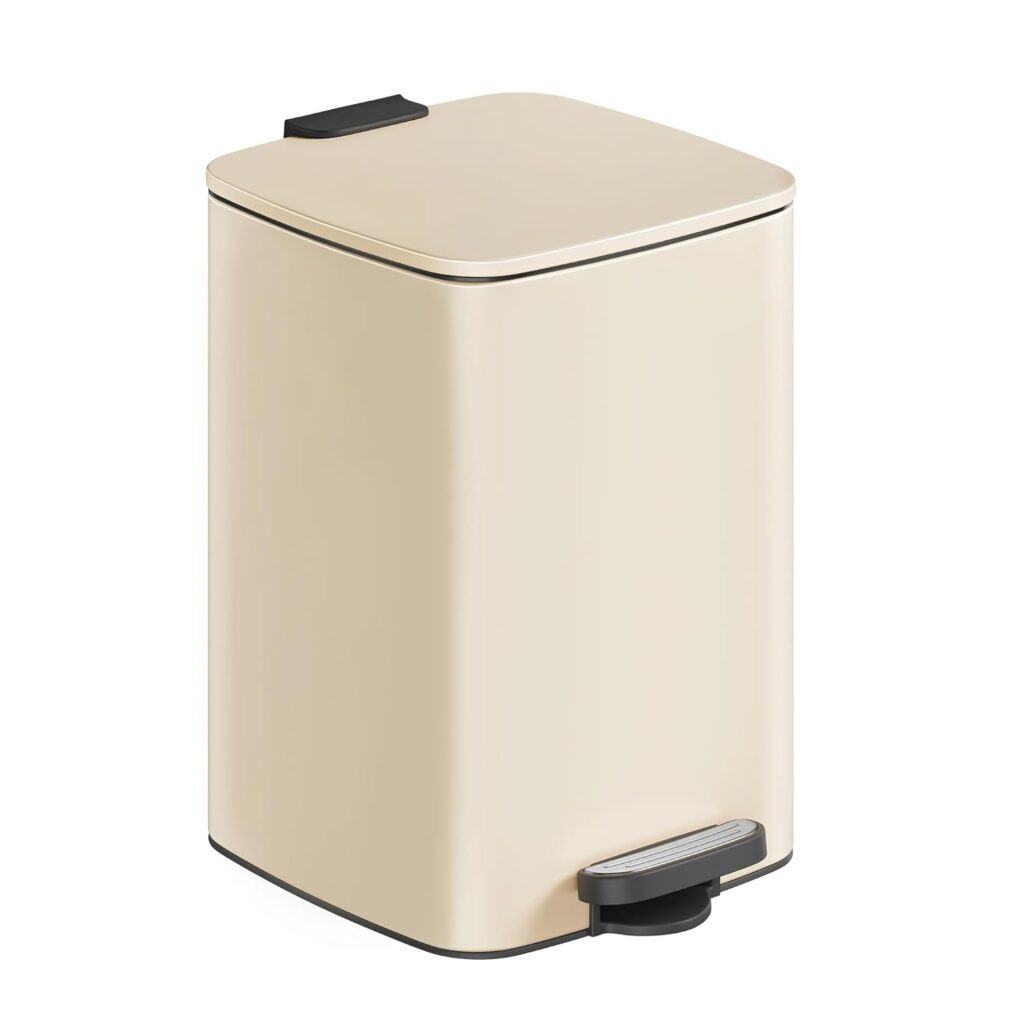
For buyers who have already decided that a square format fits their application, the T1027 series provides a broad capacity range from 6L to 60L.
The series uses 410 stainless steel + PP and includes:
- Removable PP inner bucket
- Soft-close lid
- Fully sealed base
- Fingerprint-resistant coating
- Optional powder coating colors
- OEM / ODM support
- Laser logo customization
- Multiple capacity options from 6L to 60L
The range allows buyers to use the same general product style across different locations rather than sourcing unrelated bins for every room.
For example, a hospitality project may use smaller capacities in guest bathrooms and larger capacities in shared or service areas.
The key purchasing question remains the same:
Does the square footprint work for the actual space?
If it does, a unified size range can simplify product selection and assortment planning.
Final Buyer Checklist
Before approving a square pedal bin for a commercial or hospitality project, confirm these five areas:
| Check | Question |
|---|---|
| Space | Does the footprint fit the actual installation area? |
| Capacity | Is the volume appropriate for the waste generated? |
| Construction | Are the material and structural specifications suitable for the capacity? |
| Operation | Does the lid and inner-bucket design support daily use? |
| Supply | Can the supplier provide the required capacities, finishes, packaging, and OEM options? |
There is no universal winner between square and round pedal bins.
The better procurement decision comes from matching the bin’s footprint to the room, then matching capacity and construction to the actual workload.
For buyers developing a hotel, office, apartment, retail, or commercial product range, evaluating these factors before placing a bulk order can help reduce the risk of choosing a product that looks suitable in a catalogue but performs poorly in the actual installation environment.
Looking for a Square Pedal Bin Series for Different Spaces?
If you are comparing square pedal bin options for hospitality, office, residential, or commercial applications, OWIN can provide T1027 specifications across 6L–60L, including OEM/ODM and private-label options.
Contact:
Email: info@owinhw.com | sales02@owinhw.com
WhatsApp / WeChat: 0085261915769
Related reading:
- 410 vs. 304 Stainless Steel Waste Bins: A Buyer’s Guide
- Commercial Waste Bin Purchasing Checklist for Cafés, Offices & Restaurants
- 7 Common Quality Problems in Bulk Waste Bin Orders and How to Address Them